
 Cyber Security
HIPAA Security Risk Assessment for a Small Physician Practice Generator
Generate a HIPAA security risk assessment for a small physician practice PDF with source-backed hazards, controls, risk ratings and review actions.
How to generate your draft PDF
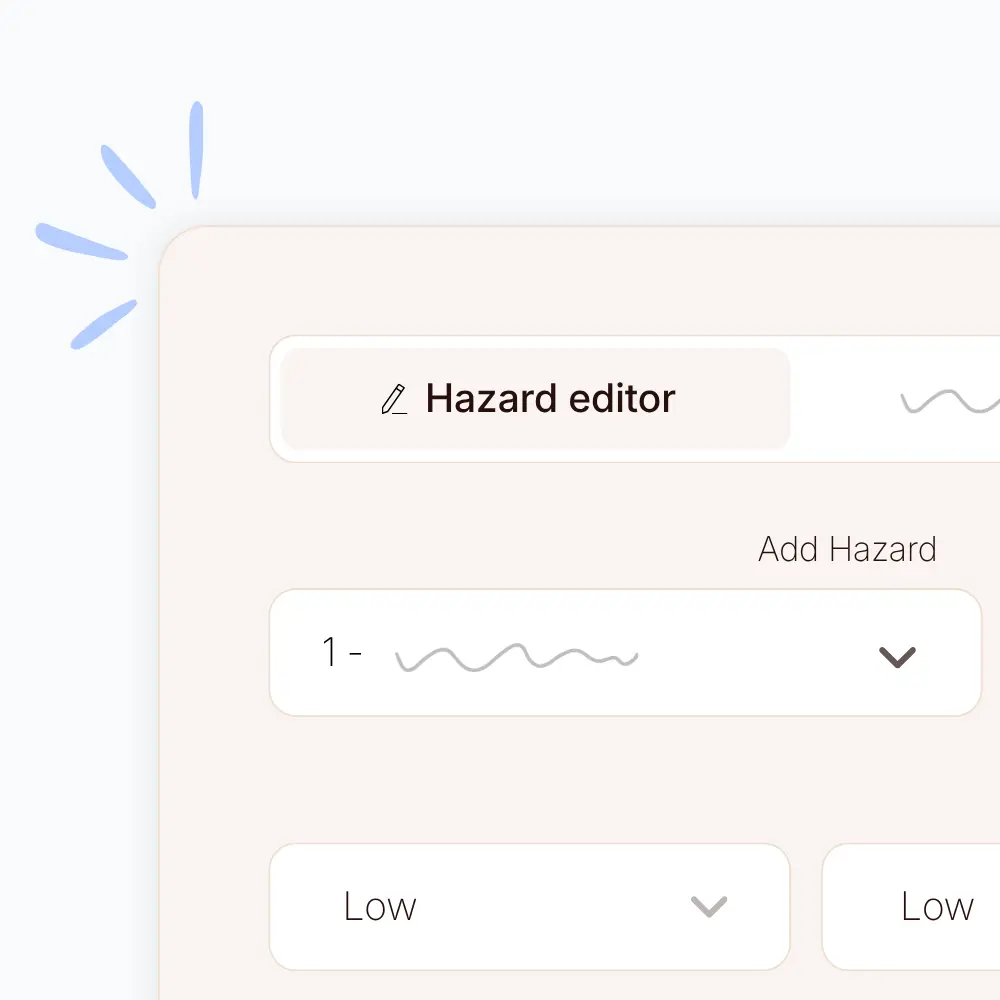
Edit or add hazards
Choose a preloaded hazard, add your own, and adjust the initial risk details.

Fill the assessment
Add controls, optional action details, and residual risk ratings.

Review and export
Review all hazards, then generate the draft PDF for internal review.
Interactive Assessment
What should be included in scope?
Include the assets, systems, and data that matter most to your organization for a complete and meaningful risk assessment.
5
key scope areas
Focus on the areas that have the greatest impact on your risk posture.
- EHR, ePHI repositories, cloud services, email, patient portals, backups, and the practice data flows between them
- Workforce users, administrators, role-based access, remote access, shared responsibilities, and recently terminated staff
- Workstations, laptops, mobile devices, removable media, device encryption, and physical access in the practice
- Vendors, business associates, integrations, hosted services, and third-party systems that handle or support ePHI
- Backups, audit logging, incident response, ransomware recovery, patient communications, and remediation tracking
- 1
ePHI system and asset inventory
Helps identify where ePHI is stored, processed, accessed, transmitted, or backed up across practice and third-party systems.
- 2
Workforce access and user-account report
Helps identify excessive access, shared accounts, dormant users, and former staff access that no longer matches current roles.
- 3
Device and patch/security status records
Shows whether workstations, laptops, mobile devices, and software are supported, patched, encrypted, and protected.
- 4
Backup and restoration test records
Shows whether critical patient information can actually be recovered after ransomware, deletion, or system failure.
- 5
Vendor, business-associate, and security documentation
Helps identify third-party systems handling ePHI and the security responsibilities and dependencies associated with them.
Assessment details
Category
Cyber Security
Frameworks and guidance
NIST SP 800-30; NIST Cybersecurity Framework 2.0; CISA cybersecurity best practices; HHS HIPAA Security Rule risk analysis guidance
Last verified
June 30, 2026
Review status
Source mapped / Not human reviewed
Related risk assessment generators
Explore related draft assessment generators that use similar source-mapped risk and control guidance.
Cyber Security Risk Assessment Generator
Generate a risk assessment for cyber security PDF with source-backed hazards, controls, risk ratings and review actions.
Cyber Security Risk Assessment for SCADA and DCS Networks Generator
Generate a cyber security risk assessment for SCADA and DCS networks PDF with source-backed hazards, controls, risk ratings and review actions.
Security Risk Analysis for MIPS Generator
Generate a security risk analysis for MIPS PDF with source-backed hazards, controls, risk ratings and review actions.
PHI Breach Risk Assessment Generator
Generate a PHI breach risk assessment PDF with source-backed hazards, controls, risk ratings and review actions.
Information Security Risk Assessment Generator
Generate a risk assessment for information security PDF with source-backed hazards, controls, risk ratings and review actions.
Information Security Risk Assessment for Banks Generator
Generate a information security risk assessment for banks PDF with source-backed hazards, controls, risk ratings and review actions.
HIPAA Security Risk Assessment for a Small Physician Practice FAQs
A HIPAA Security Rule-oriented risk assessment for a small physician practice examines where ePHI exists, who can access it, and how the practice protects its EHR, endpoints, remote and mobile access, vendors and business associates, backups, audit logs, and patient communications. It helps identify practical risks such as phishing, ransomware, excessive access, and incomplete recovery arrangements; the generated output is a structured draft that requires review for the actual practice.
Generate your HIPAA Security Risk Assessment for a Small Physician Practice PDF
Use preloaded hazards, suggested controls, and source-mapped guidance to create a draft assessment for review.